

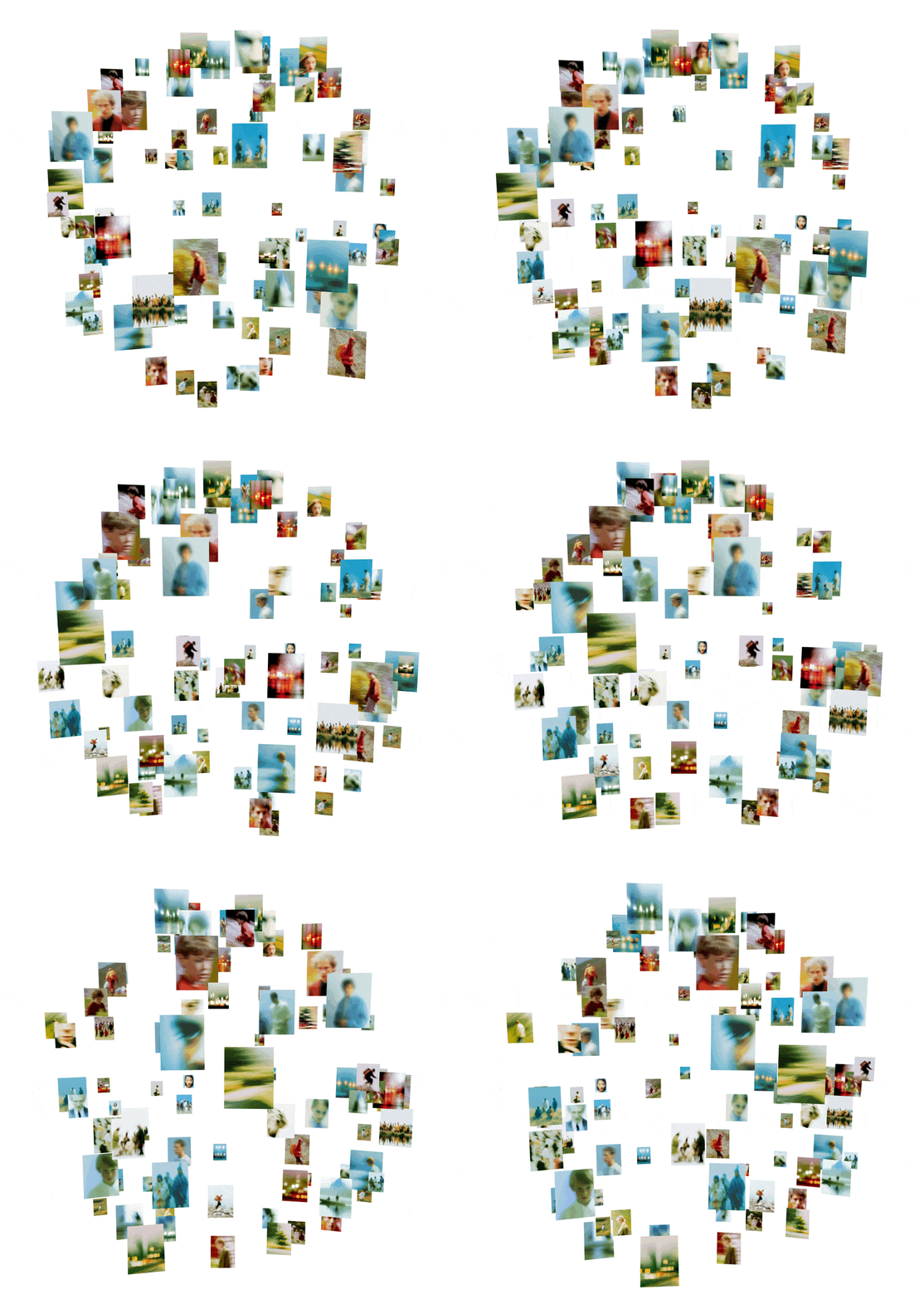
Noema is an independent fragrance concept developed through a collaborative R&D process between IMPROMPTU studio and Studio Ronny Ebnoether.
Conceived as a working model rather than a response to a commercial brief, the project explores how a fragrance brand can operate when designed as a system for participation instead of a fixed offer.
At its core, Noema investigates an alternative relationship between brand and user — one where personal memory and emotion become active inputs that shape the outcome.
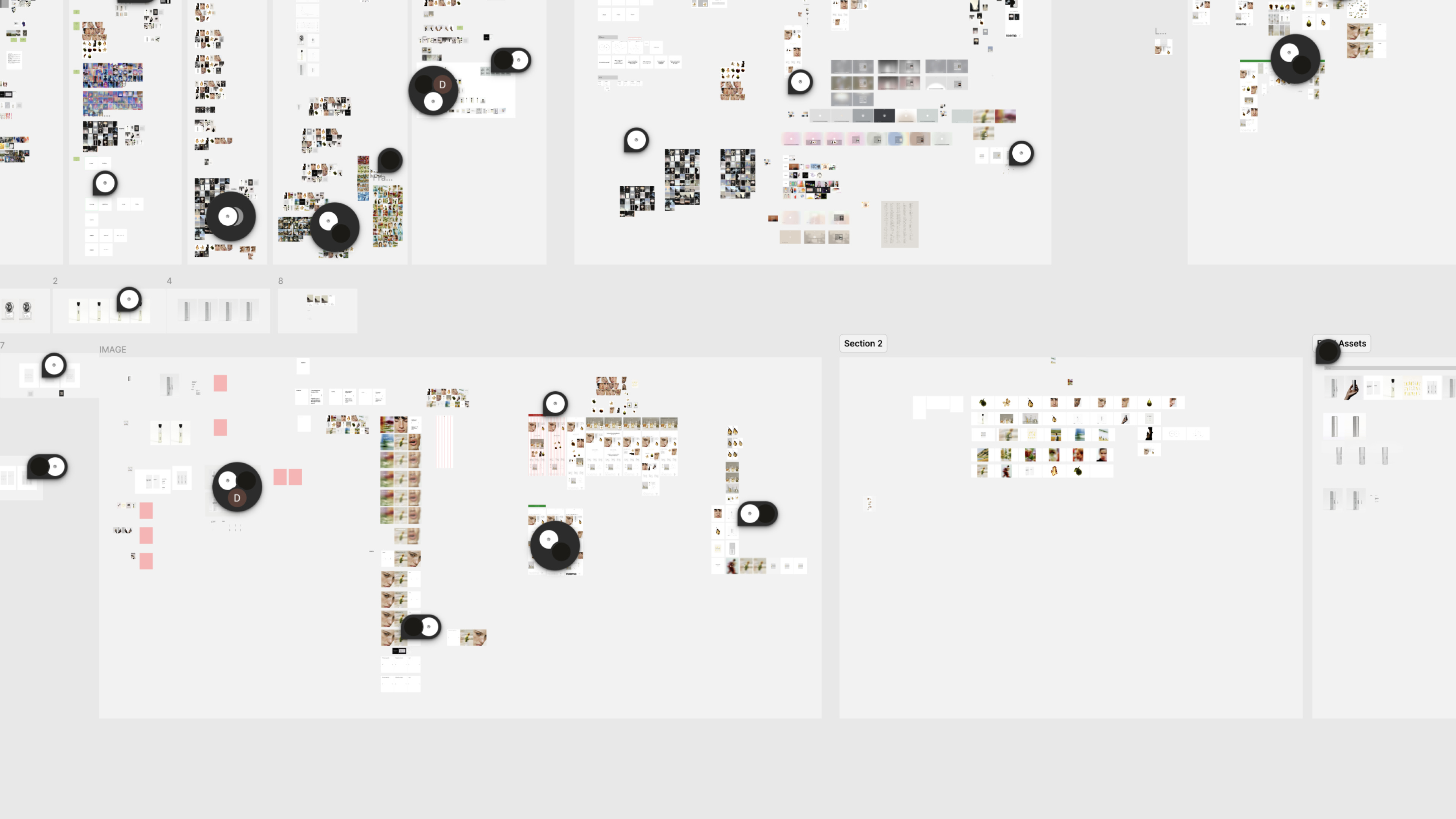
Developed within the internal labs of both studios, Noema functions as a complete brand system spanning strategy, experience, visual language, and material expression. This case study documents that process as a practical exploration of how brands might evolve from storytelling into participatory systems without losing clarity or authorship.
Concept
Noema proposes a participatory model in which users actively shape the outcome through personal input.
Instead of preferences or product attributes, the experience begins with memory and emotion. Users describe moments, sensations, or states of mind, which the system translates into a personal sensory configuration: a visual expression and a corresponding fragrance direction derived from the same underlying narrative.
The objective is not personalization as variation, but authorship within a coherent framework. Each result is individual, yet recognizably part of the same brand system.
This reframes the role of the brand — from producer of finished objects to curator of a structured space for personal expression, while maintaining coherence, identity, and control.
Strategic Foundation
The project was structured using the same strategic process applied to client work: defining a clear position, a set of values, and a coherent operating model.
Noema sits at the intersection of fragrance, design, and cultural practice. Its positioning is not defined by category, but by how these disciplines are brought together into a single system.
Three principles guided the strategic foundation of the project:
Positioning
Noema operates between sensory creation and authorship. It is not a product brand, but a framework that enables personal expression within a curated structure.
Values
The system is built around emotional clarity, precision, and coherence. These values informed every decision — from interaction design to visual language and material choices.
Operating model
Rather than producing a fixed range of fragrances, Noema is designed as an adaptive system. Individual outcomes vary, but the underlying logic remains constant, ensuring continuity at a brand level.
This structure allowed the project to remain open to individual input while maintaining a clear identity — a necessary balance if co-creation is to function beyond experimentation.
From Strategy to Creative Direction
One of the key questions during the development of Noema concerned the role of packaging within the brand system.
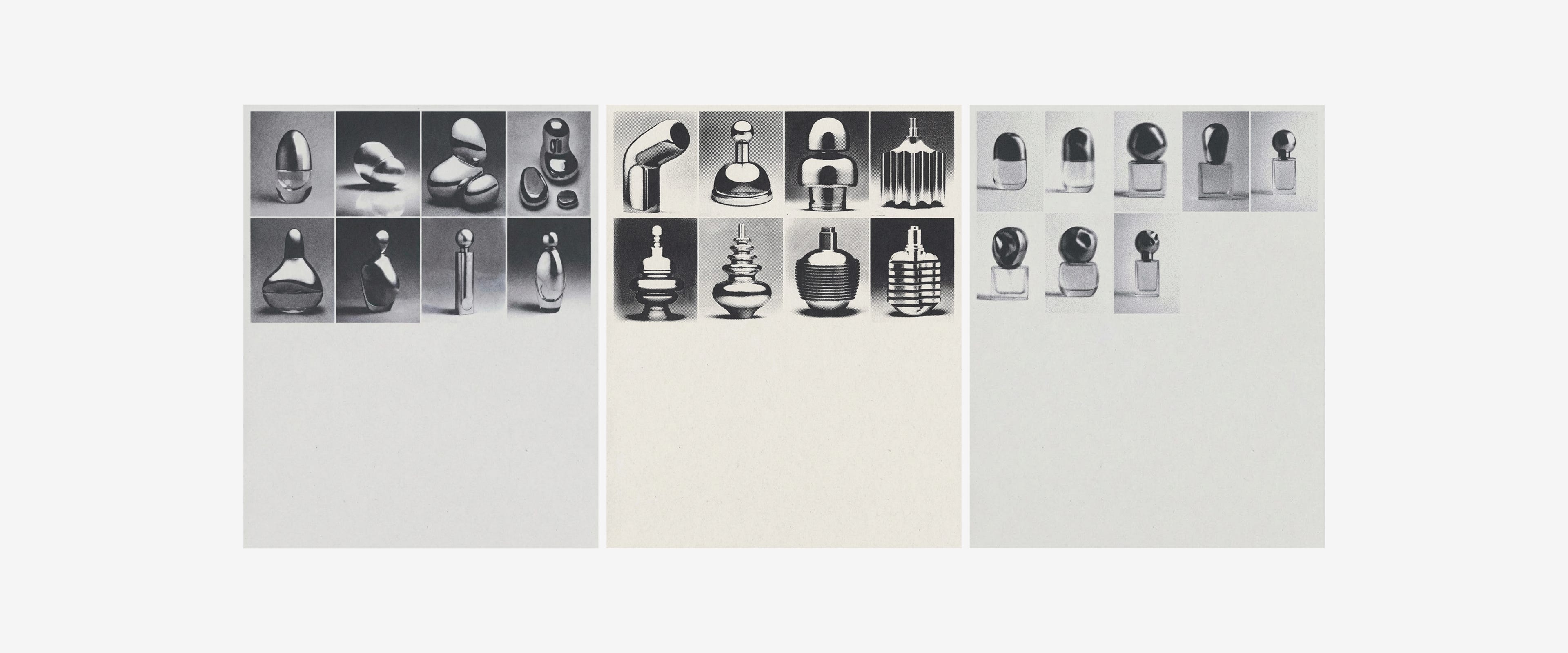
In contemporary perfumery — both mainstream and niche — the bottle often functions as the primary branding device. Two dominant directions coexist: on one hand, highly recognizable objects defined by expressive volumes and materials; on the other, neutral or restrained designs that lean towards the industrial, the normative, or the understated.
To understand this landscape, we conducted a benchmark across both segments. Initial explorations followed the first direction, testing distinctive forms and material expressions in search of a recognizable visual territory.
As the project evolved, however, it became clear that differentiation through the bottle itself would not be where Noema could operate most meaningfully. The value of the brand was not located in the object, but in the relationship it proposed.
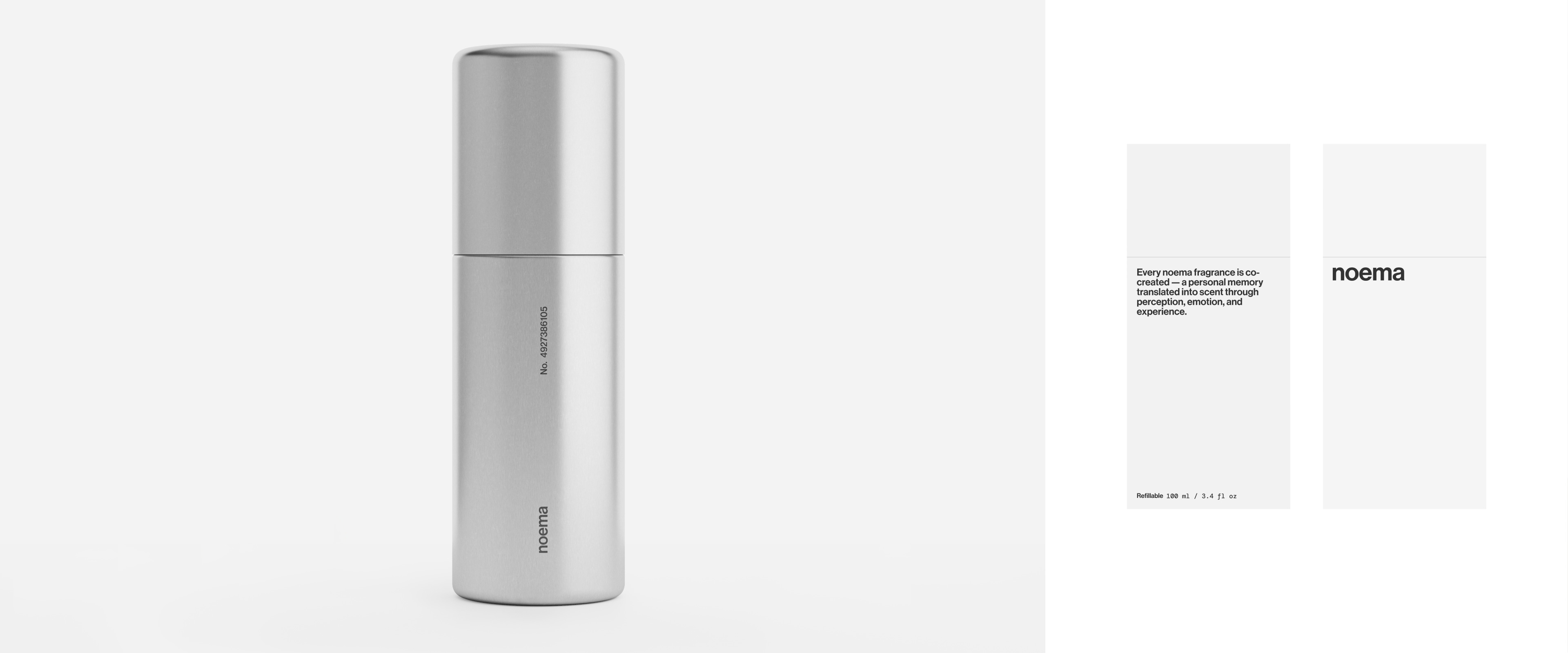
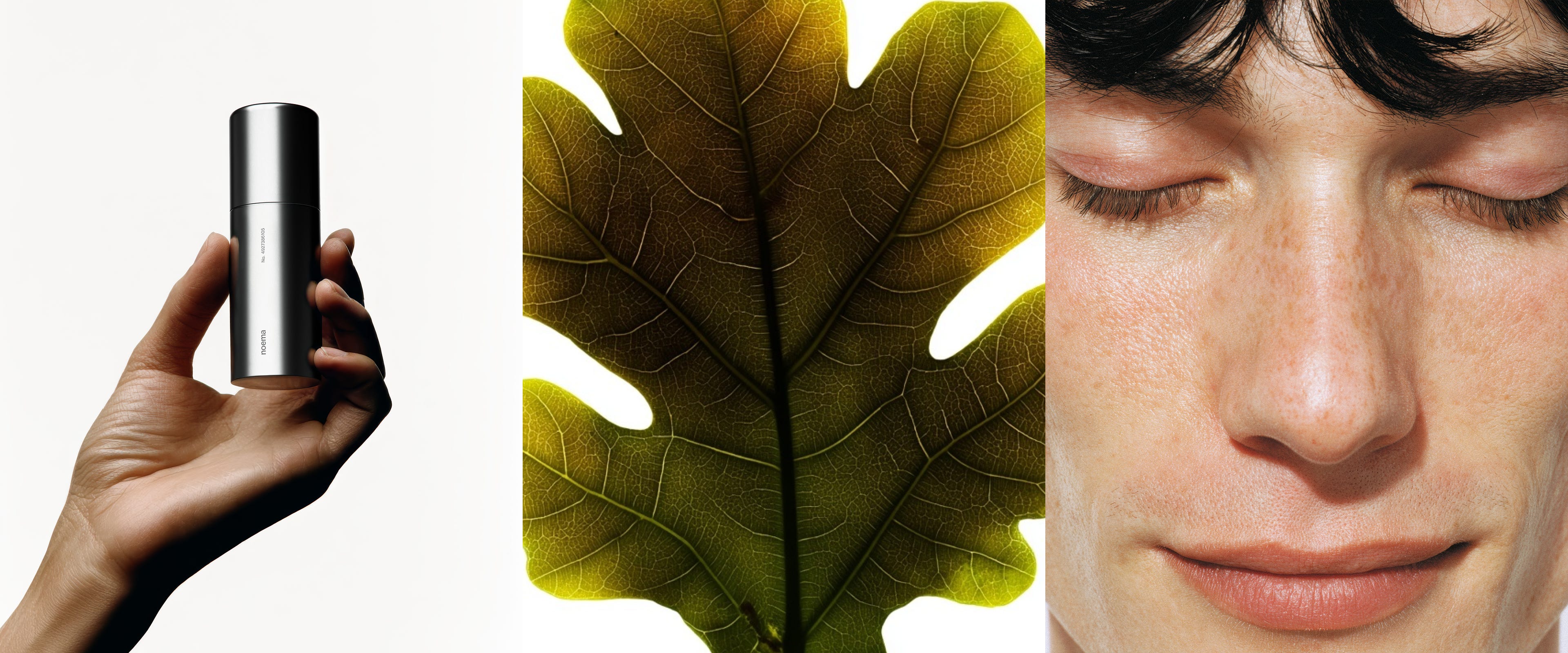
Since Noema is built around co-creation, iteration, and personal authorship, the physical container needed to support that logic rather than compete with it. The bottle became a secondary element — designed to be functional, repeatable, and adaptable to multiple versions of a user’s fragrance over time.
This shift redirected the brand’s expression away from the object and towards its creative direction and digital experience. The bottle became a supporting element within a broader system of interaction and interpretation.
As a result, greater emphasis was placed on a coherent visual language — one in which imagery functions as an adaptive layer, translating personal input into consistent expression.
Here, branding is articulated less through form alone and more through the structure that enables variation while maintaining identity.
Translating Memory into Experience
The experience begins with an invitation to pause.
Instead of selecting options or defining preferences, users are guided into a moment of recollection. They are asked to describe a memory — a place, a situation, a sensation — using their own words and rhythm.
The interaction is deliberately unhurried. There is no checklist, no taxonomy to follow. What matters is not accuracy, but presence: how something was felt rather than how it should be described.
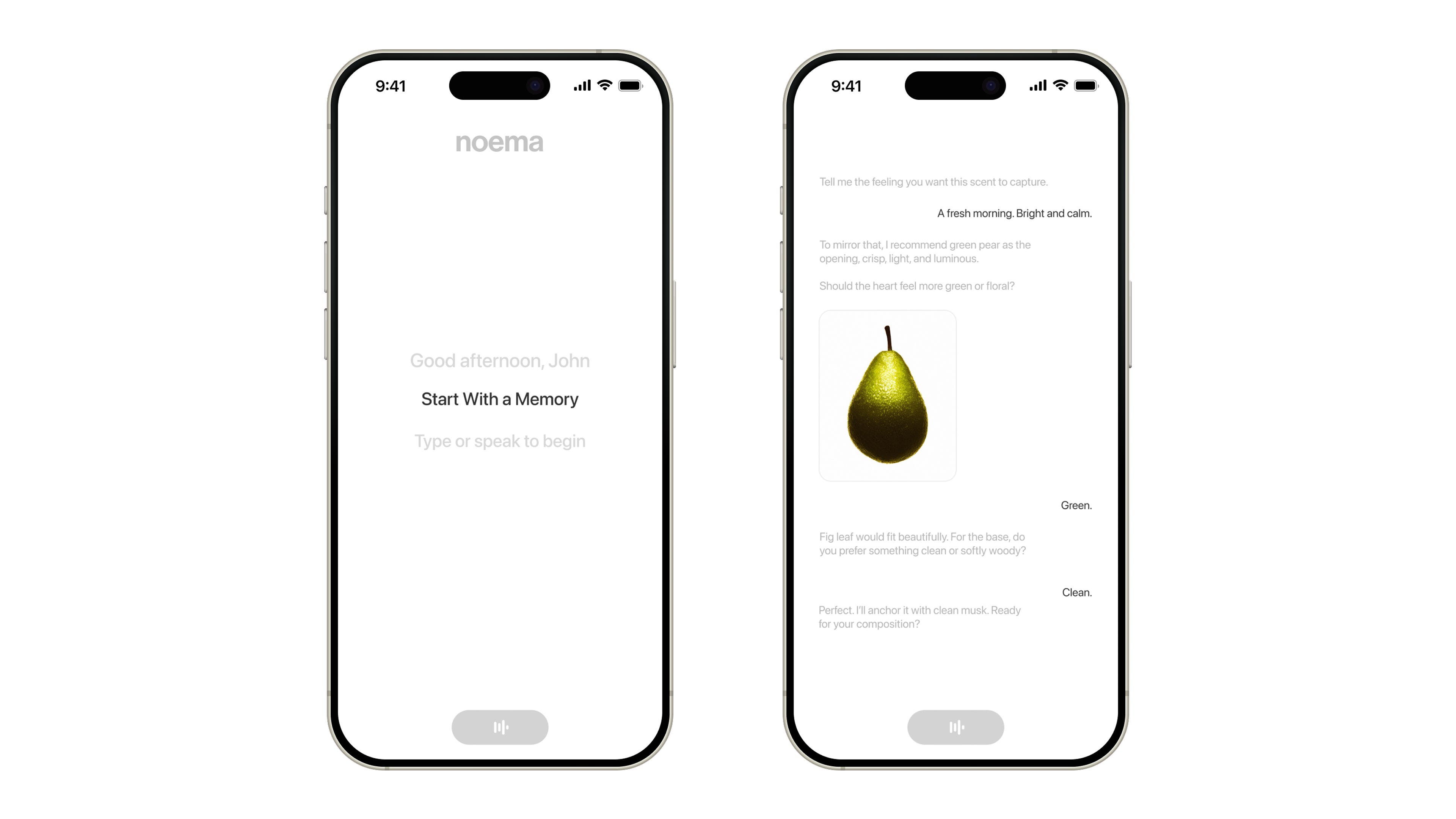
As the memory unfolds, attention shifts to details that are often overlooked — light, atmosphere, texture, distance, temperature. These elements form the emotional landscape from which the system responds.
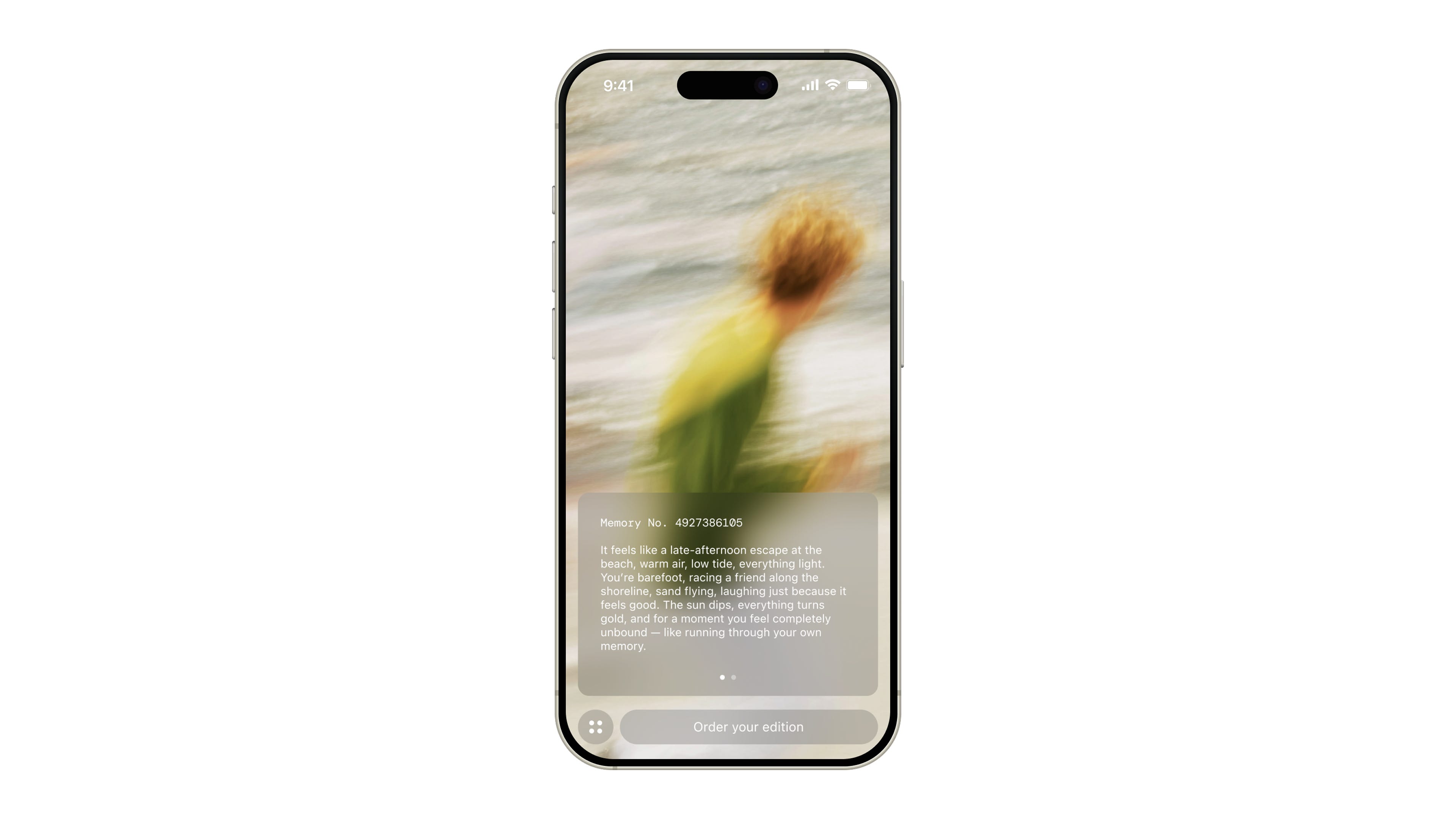
From this input, two expressions emerge in parallel. A visual composition translates the emotional tone of the memory into form, color, and rhythm. A fragrance direction echoes the same narrative through material and olfactory cues.
The process does not aim to recreate a memory literally. Instead, it captures its essence — allowing subjective interpretation to remain intact.
The interaction takes place within a modal environment that adapts to the flow of the exchange. At times it expands to listen; at others it becomes a surface for reflection or visualization. Its behavior mirrors the experience itself: responsive, fluid, attentive.
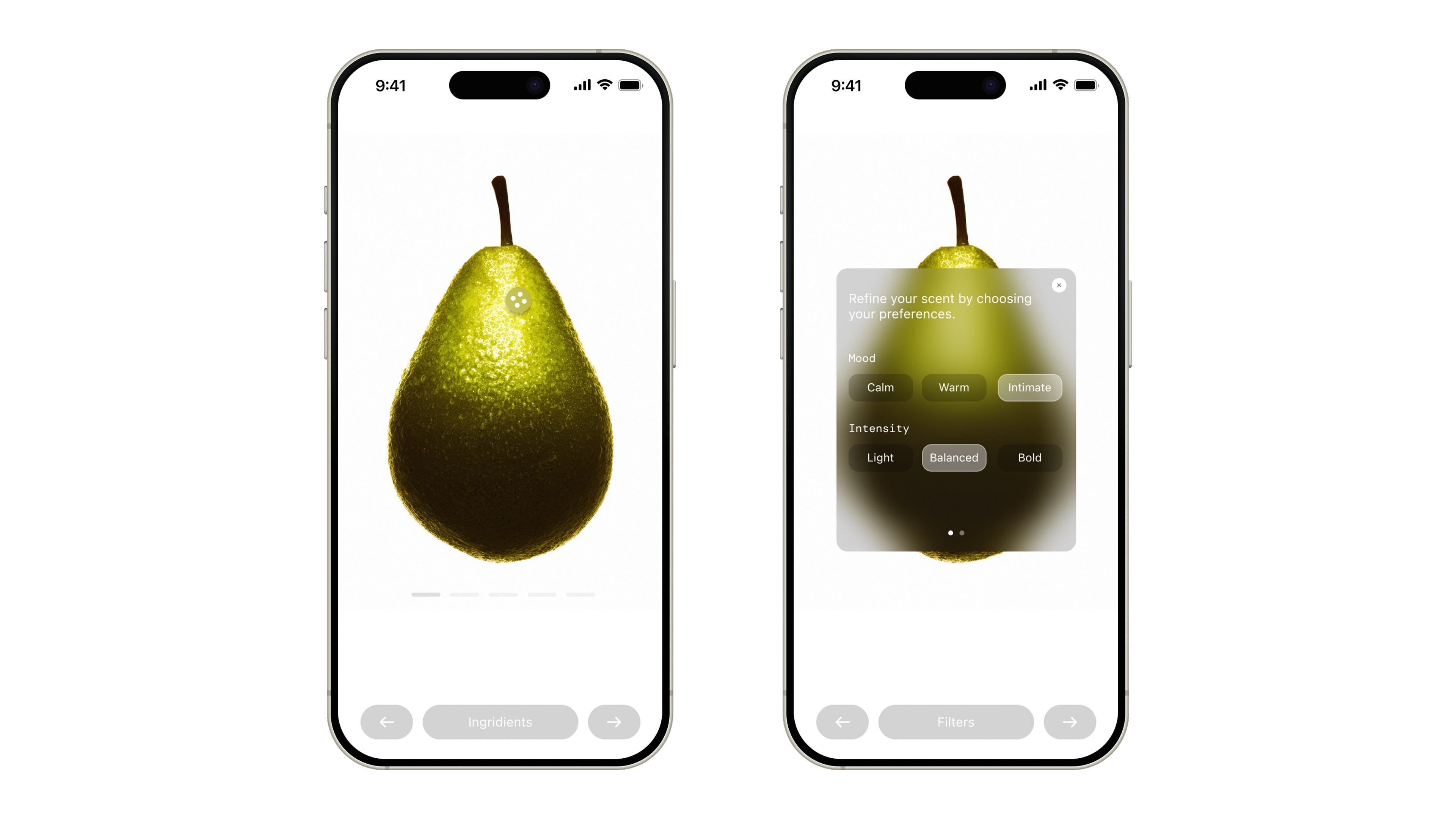
Through this sequence, co-creation is not framed as a task, but as a conversation. One where the brand listens first, and where expression takes precedence over selection.
The result is a paired artifact — scent and image — connected by a shared emotional logic. Each outcome is personal, yet remains grounded within the same aesthetic system, allowing variation without fragmentation.
Coherence through Constraint
While each outcome generated within Noema is personal, the system is designed to preserve a shared identity.
This coherence is not enforced through rigid rules, but through a limited set of guiding principles embedded in the experience: tone, rhythm, materiality, and visual restraint.
These parameters operate quietly in the background, ensuring that individual expressions remain connected to the same aesthetic and conceptual world.
The intention is not to limit creativity, but to give it direction — allowing variation without dilution, and authorship without fragmentation.
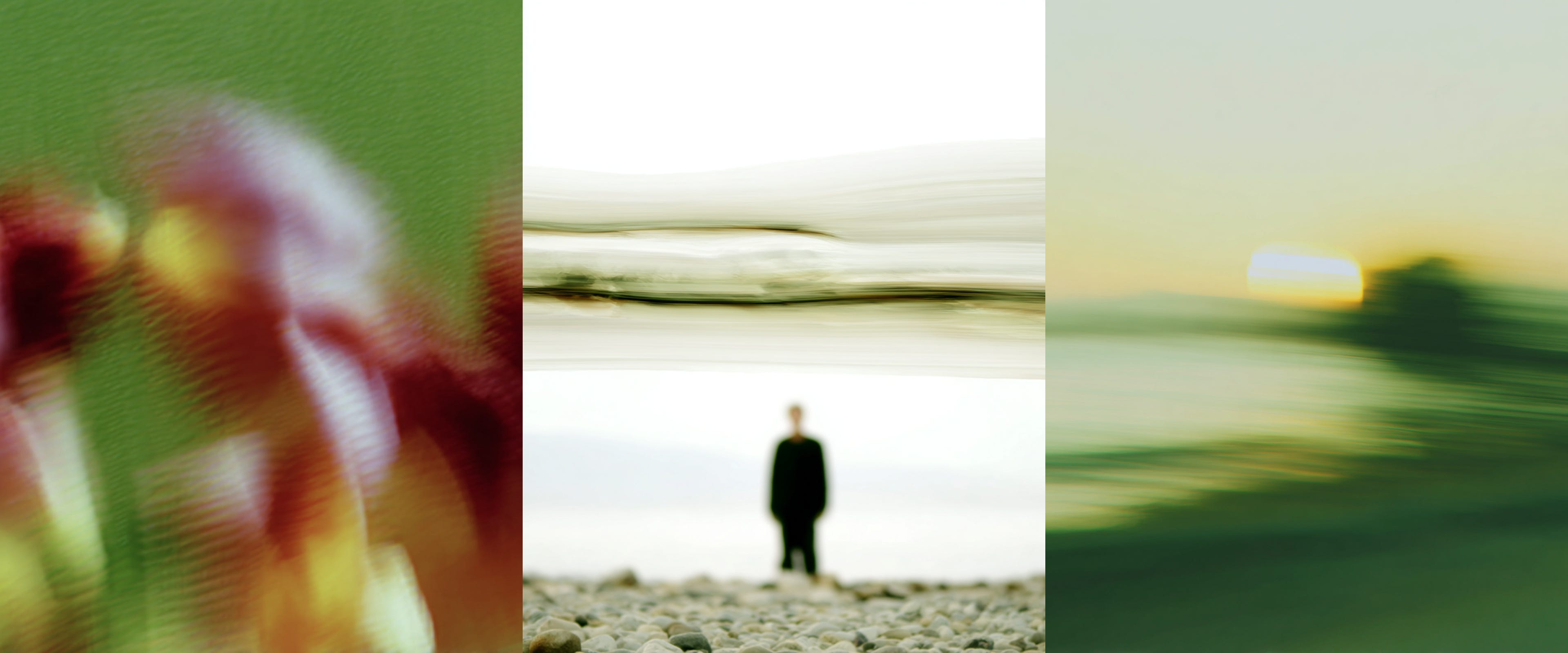
Visual & Material Expression
The visual and material expression of Noema was conceived to support the system rather than dominate it. The visual language is deliberately restrained, providing continuity and atmosphere while allowing individual expressions to emerge without a strong formal signature. The art direction emphasizes emotional proximity through human presence, gestures, and fragments of raw ingredients, complemented by laboratory imagery that references motion, craft, and transformation.
Soft light, tactile materials, and reduced compositions create a clean yet sensitive aesthetic, designed to remain open to variation rather than impose a fixed identity.
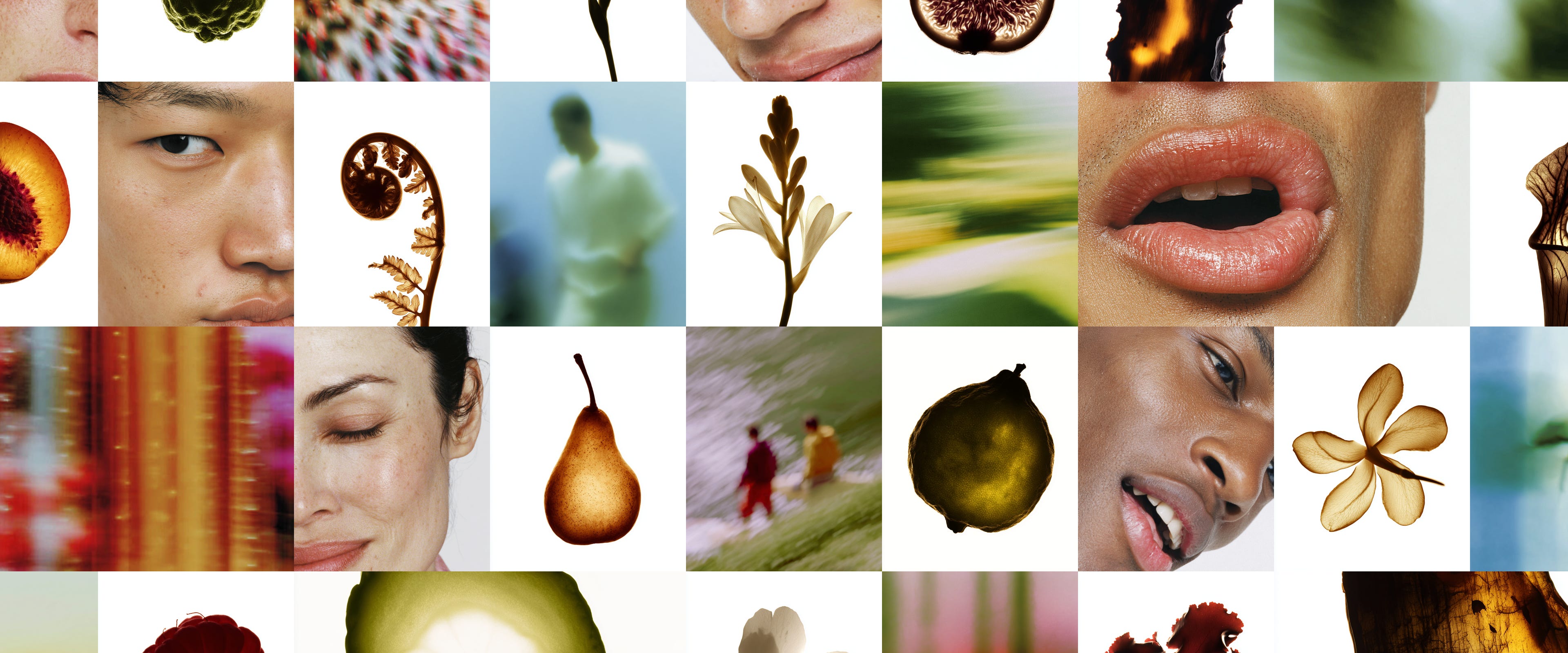
This approach extends across interface, imagery, and physical components. Packaging, typography, and visual composition function as infrastructural elements: coherent, consistent, and present — but never prescriptive.

Reflection
Although Noema was developed as an independent project, it functions as a proof of concept.
The project resulted in a coherent brand system designed to operate across digital and physical contexts, exploring how a fragrance brand might move beyond fixed products towards participatory systems without relinquishing identity.
Together, these elements demonstrate how a brand can be designed as an operational system, one that prioritizes interaction and authorship while remaining coherent and controllable at scale.
For IMPROMPTU studio and Studio Ronny Ebnoether, Noema represents an applied way of thinking, where strategy, design, and experience are treated as a single, continuous process.
Rather than proposing definitive answers, the project offers a working model for further exploration and real-world application across different brand contexts.
Credits
Strategy, Creative Direction, Product Design, Digital Design & Development, AI Imagery
by IMPROMPTU studio × Studio Ronny Ebnoether
3D renderings by Archivo Studio
An Ongoing Dialogue
Curated is an ongoing dialogue, a living system of ideas exploring design, technology, and culture through curiosity and conversation.
I’d love to hear from you, what’s been inspiring you lately, or what’s been shaping your sense of taste? Reply anytime or contact me directly via Instagram or LinkedIn.
Thanks for reading. If this resonates, forward it to someone who values taste, design, and technology as much as you do.